
Leadership Systems, Not Training Events: A CHRO’s Guide to a Leadership Transformation System
The leadership programme receives excellent feedback. The facilitator is engaging, the course is polished and the team leaves with models, strategies and admirable intentions.
Three months later, difficult conversations are still being avoided. Leaders still escalate decisions, participants struggle to transfer learning into work, and strong employees still leave managers they no longer trust. The evaluation forms, naturally, remain lovely.
This is the executive tension: organisations invest in leadership development, training, education and growth, yet cannot show meaningful change, impact or return on time. Research and experience across every sector suggest that skills require practice, reflection, feedback and reinforcement, not a single program, group, community or series of sessions.
For the CEO and CHRO, this is not simply a learning problem. It affects execution, retention, succession, culture and transformation. The question is whether leaders have the awareness, purpose and approach to help others perform, or whether the organisation is asking one course to solve a system problem.
A repeatable Leadership Transformation System connects leadership to real work, measurable behaviour and business priorities. It gives professionals the space to practise, test and improve what the organisation needs without pretending that training alone changes how teams operate.
What Is a Leadership Development System?
A Leadership Transformation System links assessment, focused learning, real-work application, coaching, accountability and measurement. It turns leadership education into observable capability rather than leaving participants with ideas they may never use.
Unlike a course or training event, it operates before, during and after formal learning. It creates standards a team can own, measure and replicate across roles, functions and markets.
That is the short answer.
The commercially important answer is that leadership development should operate as organisational infrastructure. The board should be able to ask: what leadership behaviour has changed, and what business evidence shows it?
Leadership Training Is an Input, Not an Outcome
A strong programme can challenge assumptions and provide practical tools. But attendance, completion and time spent learning do not prove capability.
A manager may understand delegation yet interfere with every decision. Another may discuss psychological safety while making disagreement hazardous. Knowledge is not behaviour, and behaviour is not automatically impact.
The CIPD’s guidance on learning evaluation recommends connecting evaluation with performance gaps and business objectives. Measurement should therefore combine behavioural evidence with relevant business indicators, not promise that one program or training intervention caused every result.
If the desired shift has not been defined, almost any positive comment can be presented as success. It is not.
Training Event vs Leadership Development System
The structural difference is straightforward:
| Training event | Leadership development system |
| Begins with programme content | Begins with organisational priorities and capability gaps |
| Offers the same material to everyone | Focuses development according to role, level and need |
| Concentrates on the classroom | Extends into daily work |
| Measures attendance and satisfaction | Measures observable behaviour and business contribution |
| Depends on individual motivation | Creates managerial reinforcement and accountability |
| Ends after the final module | Continues through coaching, application and review |
| Produces certificates | Produces evidence for talent and business decisions |
One is something managers attend. The other changes how leaders manage, make decisions and hold others accountable.
The distinction sounds obvious. Yet organisations often buy a sophisticated course or leadership program and assume the surrounding system will assemble itself.
It will not.
Why One-Off Leadership Training Produces Limited Change
Leadership behaviour is shaped by the operating environment. A manager may learn to delegate, but if senior leaders routinely reverse delegated decisions, the old behaviour returns. A team may be encouraged to challenge constructively, but if disagreement is punished in executive meetings, silence remains the safer strategy.
The formal programme says one thing. The organisation rewards another. Guess which one wins.
The Center for Creative Leadership describes learning as a process rather than merely a programme and emphasises preparation, workplace application and social support for leadership learning transfer.
That is not a minor design detail. It is the difference between understanding leadership skills and using them under pressure. Organisations cannot train their way out of contradictory signals.
A leadership development system therefore works on two levels:
- It develops the individual leader.
- It improves the conditions in which that leader is expected to perform.
Ignore the second level and the organisation may train managers to solve problems the organisation itself keeps creating.
The Six Components of a Leadership Development System
A credible system connects six components. This is not a catalogue of courses; it is an approach to building leadership capability that the business can measure and repeat.
1. Assessment: Establish the Leadership Baseline
Development should begin with diagnosis. What does the business need leaders to do differently? Where is behaviour supporting execution, succession and retention, and where is it creating risk?
A useful baseline may combine assessments, structured interviews, employee feedback, performance patterns, succession data and relevant business indicators. Its purpose is not an attractive personality report. It is to identify two or three behaviours that matter commercially.
The CIPD’s learning-needs guidance distinguishes ongoing capability analysis from a one-off training-needs exercise. Confirm that distinction locally, particularly when using employee data. Leadership needs change with strategy, structure and market conditions.
2. Focused Development: Teach What the Business Requires
A leadership development program should select practical skills, not promise total reinvention. Translate priorities into observable standards: clearer decisions, stronger accountability or better conversations during transformation.
“Become inspiring” is vague. “Clarifies decision ownership before execution” is useful. A course, education session or community can support learning, reflection and practice, but participants also need feedback, awareness of impact and room to apply new behaviour.
Managers should share core standards while allowing sensible cultural and market adaptation. Consistency matters; leadership uniformity does not. Even the best research cannot replace disciplined practice, focused sessions and a clear connection to organisational growth.
3. Real-Work Application: Move Development Into the Job
Leadership is demonstrated on an ordinary day, not during a workshop exercise. Consider a hypothetical organisation facing repeated delays in a cross-functional transformation.
Every module should connect to that real challenge: unclear decision rights, difficult performance conversations, competing priorities or a succession risk. Participants apply the new behaviour in live work, observe the response and adjust.
The work becomes the learning environment. A skill that never enters the meeting room has limited commercial value.
The OECD has highlighted the importance of whether skills are used, not merely possessed, in its work on skills utilisation in the workplace. The same principle applies to leadership development.
4. Coaching and Feedback: Turn Insight Into Correction
In this example, a manager may believe they are protecting standards while creating dependence. Coaching and feedback expose the gap between intention and impact. Individual coaching, manager reviews, peer groups or structured feedback can provide the necessary correction.
Without that support, leaders may repeat old habits using new vocabulary. Practice must continue after the course and training sessions end.
5. Reinforcement and Accountability: Make Change Survive Pressure
Senior leaders must review commitments, recognise progress and model the expected behaviour. Otherwise, teams quickly learn that the program is optional.
6. Measurement: Show What Changed
Use this chain: business priority → required behaviour → development activity → workplace application → observable change → organisational contribution.
Track clearer decisions, less escalation, reduced rework and stakeholder experience. The aim is not to claim that one intervention transformed the business, but to build credible evidence of change.
From Individual Programmes to Organisational Infrastructure
A leadership development system becomes valuable when organisations can own, measure and replicate it. A consistent program needs common standards, clear governance and enough flexibility for different roles, markets and sectors.
A first-line manager and a regional CEO should not attend the same programme with different seating arrangements. Their decisions, risks and influence are different. Leadership standards should support promotion, performance management and succession while allowing legitimate local culture and adaptation.
The system should scale vertically:
- Emerging leaders build core people-management disciplines.
- Middle managers learn to lead through others and across teams.
- Senior executives strengthen enterprise decision-making and transformation leadership.
It should also scale across functions and markets, creating a shared leadership language, community and space for practical education.
What Board-Ready Leadership Reporting Should Show
A board does not need forty pages of workshop feedback. It needs purpose, awareness and evidence: capability gaps, behaviour change and relevant business indicators. Reports should show which strategies are improving, where succession or transformation risk remains, and what leadership impact supports continued investment.
Person-level reporting must respect confidentiality and data protection. Departmental patterns matter too. If one leader struggles to delegate, it may be individual. If whole teams do, organisations should examine structure, incentives and senior-leadership behaviour. A system makes those patterns visible; an event usually does not.
Questions CEOs and CHROs Should Ask Before Buying Leadership Training
Before approving a leadership program, ask:
- What business problem and growth priority are we addressing?
- Which leadership behaviours and skills must change?
- What baseline will we measure?
- Where will participants apply learning in real work?
- Who will coach leaders and reinforce accountability?
- How will we measure change after the course?
- Can the approach scale without rebuilding it?
If the answers are unclear, you are buying content, not capability.
Excellent content is still content.
How to Start Building a Leadership Development System
Do not redesign everything at once. Start with one population, one business challenge and enough time to assess, practise and review.
Select professionals facing a transformation, succession risk or persistent retention problem.
Then:
- Define the outcome and baseline.
- Build focused development.
- Apply it through live work and sessions.
- Provide coaching, feedback and managerial accountability.
- Review participant conversations and evidence before scaling.
This tests the system, not just satisfaction, and shows what is reusable.
Conclusion: Build Leadership Capability You Can See
Effective organizations do not confuse exposure to leadership ideas with leadership capability. They build a Leadership Transformation System that connects learning, application, coaching, accountability and evidence.
That structure turns leadership development into organisational infrastructure. It gives executives clearer standards, HR credible evidence and the business a stronger foundation for succession, execution and transformation.
The decisive question is no longer, “What leadership training should we run?”
It is this:
What does our organisation have beyond the training?
See how WIN turns leadership impact into board-ready reporting.
Frequently Asked Questions
What is the difference between leadership training and leadership development?
A course delivers content. A Leadership Transformation System builds measurable capability through assessment, practice, feedback and real-work application.
How do you measure leadership development?
Define the purpose, establish a baseline and track behavioural evidence alongside relevant business indicators. Research and stakeholder feedback can strengthen the evidence, but no single score proves impact.
Why does leadership training often fail to change behaviour?
Participants return to busy roles without reinforcement, coaching or managerial support. Existing incentives may also reward the old behaviour.
What should a leadership development system include?
It should include assessment, focused learning, application, coaching, accountability and measurement, with enough flexibility for different roles, cultures and markets.
How can a CHRO demonstrate leadership development ROI?
Connect the program to a defined business issue, then track changes in behaviour, decision quality, retention, succession readiness and team performance. The aim is a credible link, not an exaggerated promise.
How long does it take to build a leadership development system?
Begin with a focused pilot. Assess one population, address one priority capability, measure the experience and results, then refine before scaling. A practical community of leaders can support that change without turning education into another isolated event.
Click here to [Book a Free Strategy Call] and turn learning into a lasting competitive advantage.
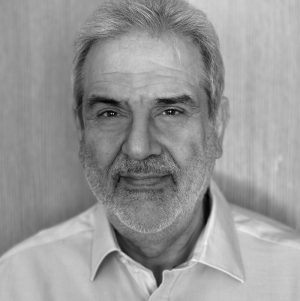
Costi Bifani
Founder @WIN Human Resource Solutions
Costi Bifani is an INSEAD graduate with over 30 years of experience in leadership, HR strategy, and organizational development.He has advised senior executives, led transformations, and built high-impact teams across industries.30+ years experience of HR and leadership roles in global and regional companies. Board-level advisor, GM-level experience, executive coach.
At WIN Human Ressource Solutions, he helps organizations grow by aligning people strategy with performance and culture.