LEADERSHIP TRANSFORMATION · POV
Leadership Transformation System: 4-Part Framework
For CHROs and HR Directors building the case for a leadership transformation system.
A single training event rarely changes how people lead. Managers may leave with useful ideas, but without a clear baseline, supported practice and follow-up evidence, the organisation often returns to familiar habits. The problem is not necessarily the facilitator or the training design; it is the assumption that one component can deliver a complex leadership outcome. Research and workplace experience both point to the value of connecting learning with application, support and measurement.
A complete leadership transformation system brings assessment, training, coaching and measurement together from the start. This integrated approach gives organisations a clearer view of capability gaps, helps leaders apply learning in real situations and shows whether behaviour is changing over time. Rather than treating a leadership program as a one-off purchase, HR can build repeatable systems that support development at scale. The sections that follow explain how each part works, how the elements reinforce one another and what evidence CHROs should seek when assessing impact.
Why sequencing fails
The conventional approach treats assessment, training, coaching and measurement as separate phases. A survey or 360-degree review may identify a leadership gap; training then follows as a short event. Coaching, if available, is often reserved for a few senior leaders, while measurement is reduced to a satisfaction score collected at the end of the program.
This sequence creates a clear cause-and-effect problem. Assessment can identify issues without showing individuals how to address them. Training may introduce a leadership framework, but without coaching there is limited support when a leader applies it with a team. Measurement added only at the end can show attendance or satisfaction, not whether leadership behaviour changed over time. The result is activity without a reliable development outcome.
WIN’s Organisational Leadership Development System runs all four elements together from day one. Assessment establishes the baseline; training targets the identified needs; coaching supports application in real work; and measurement tracks progress against the starting point. This way, the leadership program can respond to evidence throughout, rather than waiting until the finish. The same logic can be applied across leadership programs, teams and management levels, provided the method remains consistent and the organisation checks which interventions produce meaningful change over time.
Part one: assessment
Assessment is the diagnostic foundation for leadership development. Before committing budget, an organisation should identify which competency, department, management level or group of individuals requires support, using only methods that WIN confirms it provides, such as structured feedback, interviews or performance data.
In WIN’s system, a baseline leadership diagnostic is completed before the programme begins. If it produces competency scores for each manager and department, those results give HR a specific starting point for design and a clearer case for the board. Instead of saying that leadership needs work, the CHRO can show where the gap sits and define the outcome the programme is intended to address.
The baseline also creates a fair way to assess impact later. Without a starting measure, the organisation can report delivery—sessions completed or managers enrolled—but not the extent or distribution of behaviour change. Assessment therefore links the program’s activity to a measurable leadership outcome, subject to the quality of the diagnostic and the evidence collected over time.
Part two: training
Training should build practical leadership capability, not simply deliver information. When a development programme is compressed into an off-site event, it can become disconnected from the manager’s team, priorities and daily experience. A stronger program gives leaders time to learn, apply and reflect before moving to the next stage.
WIN structures training as eight blended modules delivered over eight weeks or eight months, depending on the organisation’s pace and operational calendar. Case studies, structured questionnaires, podcasts and on-the-job exercises connect the content with current work. For example, a manager can use a feedback framework in a real conversation with a team member, then review the outcome rather than relying only on a simulated exercise. This approach makes leadership development part of the job, subject to confirmation of the stated delivery format and materials.
Coaching provides the bridge between learning and consistent behaviour. In WIN’s system, each leader is supported through live implementation after each module, with group coaching and, where appropriate, one-to-one coaching for individuals. The coach’s role, qualifications and contact frequency should be confirmed, as should the relationship between coaching and the training framework. Coaching can help leaders test an approach with their teams, examine what happened and practise a better response. It does not guarantee retention, but ongoing coaching gives new leadership behaviours more opportunity to survive pressure than a single learning event.
Part three: coaching
Coaching is often the element L&D teams reduce first because its cost and outcomes can be harder to demonstrate. Yet coaching is where training content is tested against a manager’s actual working week. Its value should be assessed through observed application, participant feedback and measurable behaviour change, rather than assumed from attendance alone.
A dedicated coach can accompany each leader through implementation after every module, rather than providing only a one-off debrief. Group coaching can create shared practice across leaders, while one-to-one sessions can address an individual’s specific situation. The coach helps the manager translate the framework into action, debrief a difficult conversation and decide what to try next. This makes coaching a reinforcement process, not a promise that every behaviour will change within a fixed time.
The intended outcome is a stronger connection between leadership learning and workplace behaviour. A manager has not demonstrated leadership merely by recalling a model; the evidence is whether the model improves how they work with a team and teams across the organisation.
Part four: measurement
Measurement should show more than whether people completed a leadership program or enjoyed it. For CHROs, a useful evaluation separates participation and satisfaction from changes in leadership behaviour, competency and business performance. It should define the baseline, specify when follow-up occurs and state what the evidence can—and cannot—demonstrate about impact.
WIN’s system is described as generating data throughout the programme, including behaviour scores for leaders, competency comparisons across departments and management levels, coaching progress notes and direct-report feedback. At cohort close, these measures can contribute to an impact report for individuals, teams and the wider organisation. Yearly tracking is intended to test whether results hold after the program ends. The measurement design, response rates and relationship between reported change and business outcomes should be documented clearly, including how self-reporting and other sources of bias are addressed.
Across WIN’s cohorts, the organisation reports an average measured performance uplift of 25 to 54 percent and a 94 percent average cohort completion rate. These figures come from WIN’s own client reporting, not an independently audited third-party study. CHROs should request the cohort sizes, instruments, calculation method and supporting research before comparing them with other leadership programs or treating them as expected results. Completion is not the same as behaviour change, and behaviour change is not automatically business performance.
A credible measurement approach gives HR a defensible account of what changed, for whom and over what time. It also helps leaders refine future programs instead of relying on a satisfaction survey or assuming that activity alone proves leadership development success.
What gets lost when one part is missing
The effect of removing one component depends on the organisation’s context, budget and leadership need. However, the mechanism is predictable: assessment supports diagnosis, training creates consistency, coaching supports transfer and measurement creates accountability. Treating the four parts as optional can leave leaders with an incomplete system rather than a complete route to behaviour change.
Without assessment, training, coaching and measurement may still take place, but there is no reliable baseline. An HR leader may know that people attended and that some behaviour changed, yet not which competencies, teams or departments required the greatest support. For example, an organisation might fund a communication module for every team when diagnostic evidence would have shown that only one management group needed it.
Without training, assessment and coaching lack a shared leadership framework. Coaches may support individuals effectively, but each relationship can follow a different approach, making results harder to compare across leaders, teams and cohorts. The organisation may gain useful conversations without building a consistent leadership practice or reinforcing the culture it wants people to create.
Without coaching, leaders have fewer opportunities to transfer training into daily work. A manager may understand a model in a classroom yet struggle to use it during a difficult conversation or under operational pressure. Behaviour may improve immediately after a program and later weaken, but the timing and scale of that pattern should be tested rather than assumed to be universal. Coaching provides a mechanism for practice, reflection and follow-through.
Without measurement, assessment, training and coaching may deliver genuine value without producing board-ready evidence. The CHRO can describe activity and participant experience, but cannot confidently show what changed, for whom or by how much. That weakens accountability and makes it harder to decide whether to extend, adapt or pause the investment.
For these reasons, the four components work best as interdependent systems rather than a menu. An organisation can adjust delivery to its circumstances, but it should not remove a component without recognising the effect on diagnosis, consistency, transfer or proof of leadership impact.
Why it has to run at every level, not one cohort
A leadership transformation system should reach every management tier, not only senior leaders. WIN applies the same four-part method to the C-suite and board, senior management, middle management and team leaders, while adapting examples and development priorities to each role. The coaching standard, measurement principles and leadership framework remain consistent, so results can be compared across teams without ignoring each leader’s responsibilities.
This is particularly relevant to middle managers, whose daily decisions shape culture and the experience of people across the organisation. A program that stops at senior management may influence strategy but miss the managers who translate it into everyday practice. The case for extending leadership programs across levels should be tested with organisational evidence rather than assumed in every context.
Once deployed, the system is intended to be owned by the organisation’s L&D function, reducing reliance on repeated consulting support for each new cohort. Leaders who need further development may re-enter the coaching cycle, subject to WIN’s confirmed process. This creates a more sustainable way to support individuals over years while maintaining a consistent relationship between learning, coaching and measurement.
What “board-ready” actually needs to mean
A board-ready report should answer four questions: where did participants start, what changed, how strong is the evidence that the program contributed to that change and what action follows if a department or leader has not improved? Attendance and satisfaction alone cannot answer them. A stronger report combines a baseline, follow-up measures, competency results and a clear account of limitations, including factors that may have influenced the outcome.
Longer-term tracking also matters. A comparison at the end of a cohort shows change during the program, but not necessarily whether it lasted six months or a year later. If WIN provides yearly measurement, its methodology and follow-up rate should be confirmed. Continued evidence can show whether a leadership capability is durable, rather than confusing a temporary uplift with lasting impact.
What this means for a CHRO building the case internally
A CHRO comparing this approach with a conventional training vendor is choosing between an event and infrastructure. A course may address an immediate need; an integrated leadership system is designed to create comparable data, practical development and continued ownership across the organisation. The decision should consider evidence, scale, cost, implementation support and long-term impact rather than attendance alone.
Assessment sets the baseline, training provides the content, coaching supports leaders in real work and measurement tests what changed. Together, these elements can help organisations strengthen leadership, support culture and build systems that last beyond a single programme. CHROs should request the methodology, cohort-level evidence and a diagnostic conversation before commissioning a program or consulting engagement.
WIN is an EU Pact for Skills endorsed programme, which may support funding eligibility for qualifying organisations across EU member states. Eligibility should be verified directly, alongside the programme’s accreditation, case studies and independent evidence, rather than assumed.
Click here to [Book a Free Strategy Call] and turn learning into a lasting competitive advantage.
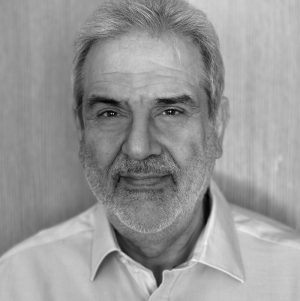
Costi Bifani
Founder @WIN Human Resource Solutions
Costi Bifani is an INSEAD graduate with over 30 years of experience in leadership, HR strategy, and organizational development.He has advised senior executives, led transformations, and built high-impact teams across industries.30+ years experience of HR and leadership roles in global and regional companies. Board-level advisor, GM-level experience, executive coach.
At WIN Human Ressource Solutions, he helps organizations grow by aligning people strategy with performance and culture.